
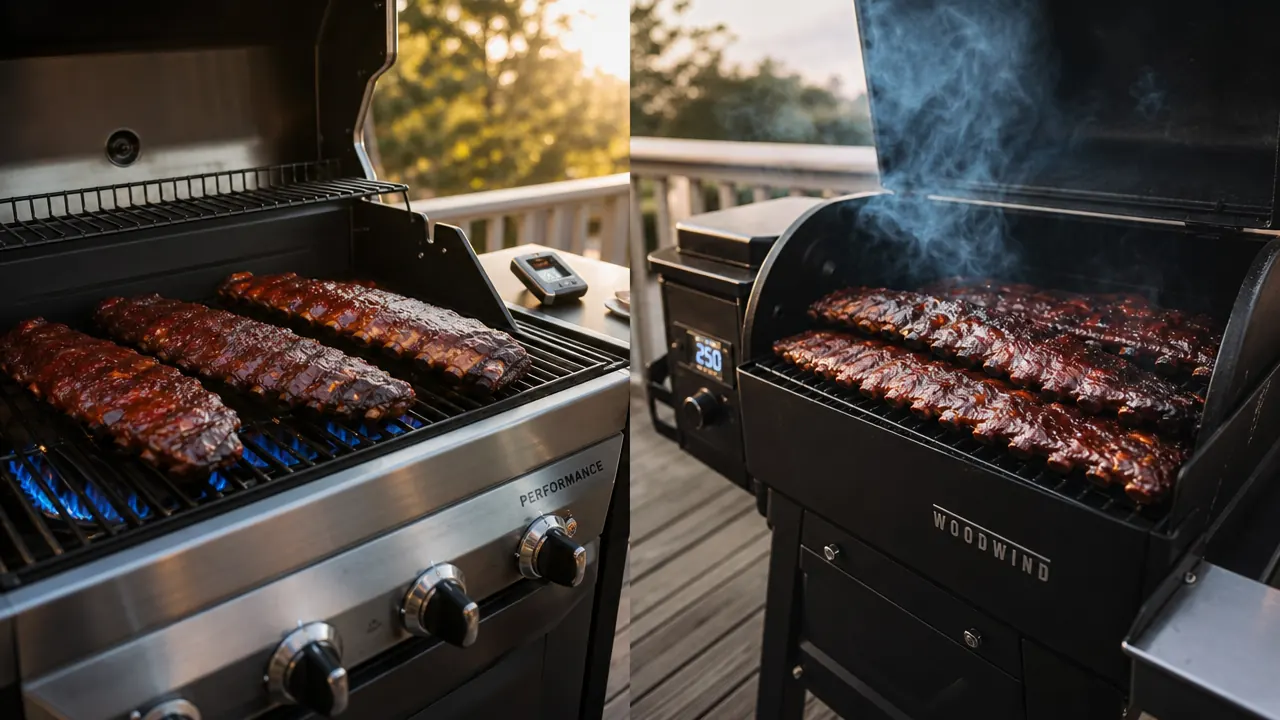
We have all been there. You fire up the propane grill, cook a perfectly good steak, and then sit down to eat something that tastes like it came off the kitchen range. Hot? Yes. Memorable? Not really. Propane does a fine job of applying heat, but it cannot do what wood does: it cannot make your backyard smell like a real BBQ joint, it cannot build a smoke ring, and it cannot turn a cheap chicken thigh into something your neighbors walk over to ask about. That is what wood pellets do.
We have been running Traeger Signature Blend pellets through our cooks for the better part of two years now, and below are the 10 concrete reasons we stopped reaching for the propane tank. This is not a knock on gas grills for a Tuesday-night burger. It is an honest list of why wood pellets win on flavor, and why the Traeger Signature Blend specifically keeps earning bag after bag in our rotation.
Your propane grill can't do this. Traeger Signature Blend can.
Hickory, cherry, and maple blended into one bag. Real hardwood, no fillers, 4.8 stars from over 50,000 BBQ cooks. Check today's price on Amazon before the next cook.
Amazon Check Today's Price on Amazon →Propane Has No Flavor. Wood Pellets Have Three.
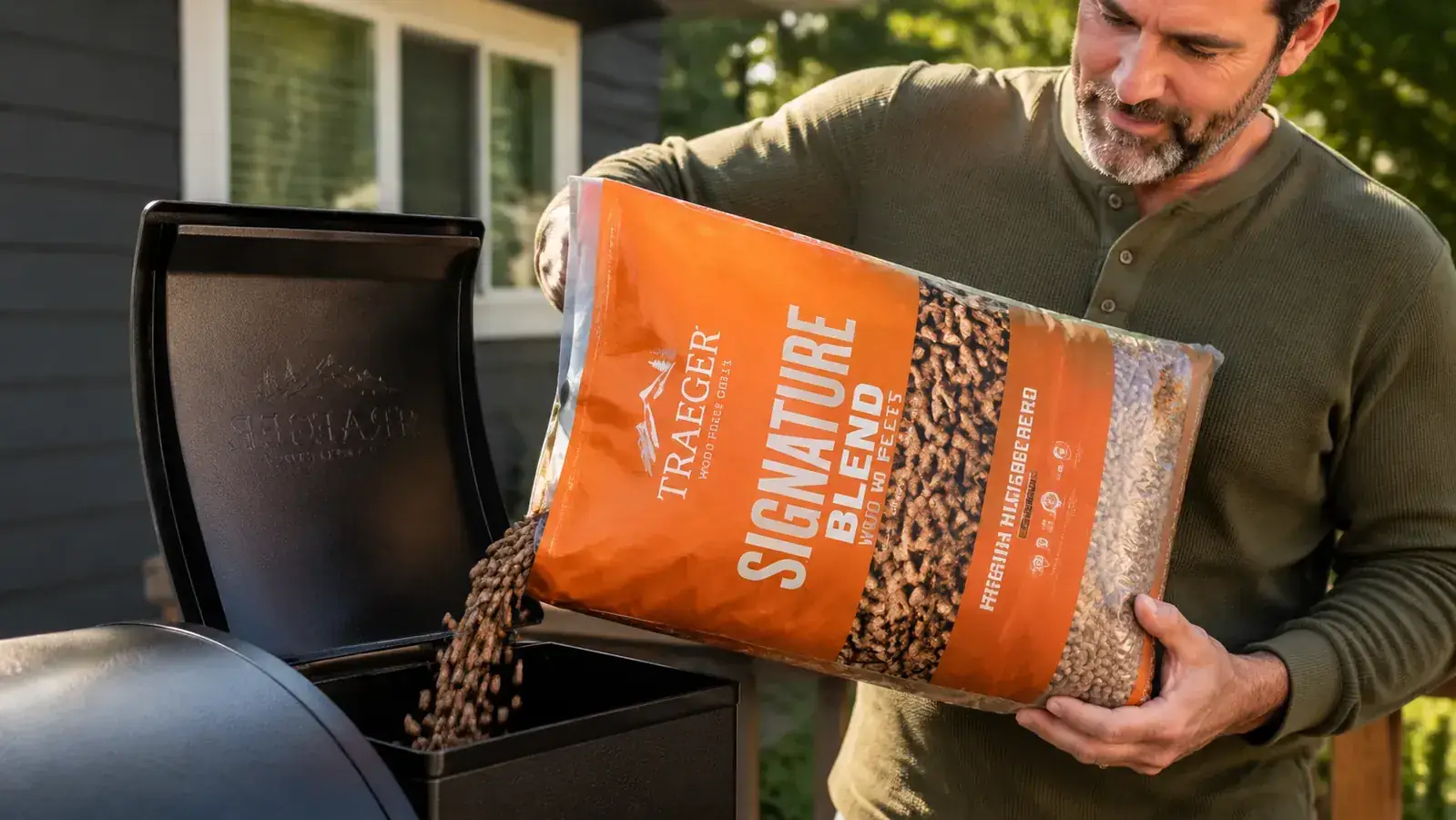
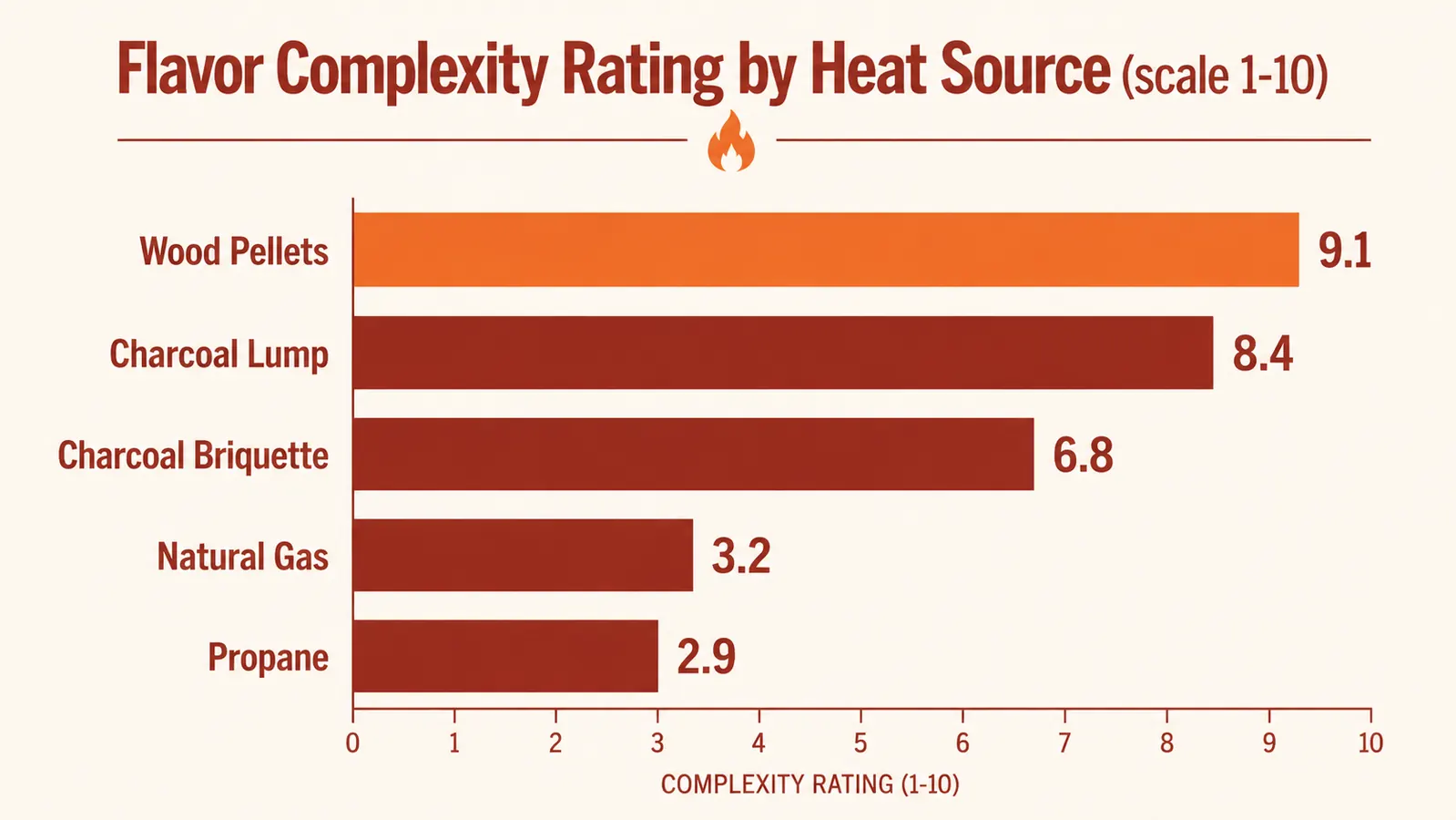
Propane combustion produces water vapor and carbon dioxide. Neither one seasons your meat. Traeger Signature Blend burns hickory, cherry, and maple together, and each wood contributes something real: hickory brings a deep savory backbone, cherry adds a mild sweetness and helps your bark color up, and maple keeps the overall flavor balanced instead of overwhelming. You taste the difference on the first bite of a pork shoulder, not just in theory.
Wood Pellets Build a Real Smoke Ring. Propane Never Will.
A smoke ring is not just cosmetic bragging rights. It is a chemical reaction between myoglobin in the meat and nitric oxide from burning wood. Propane does not produce nitric oxide, so propane cooks cannot produce a smoke ring regardless of how long you cook. If the pink ring matters to you, and it does matter when someone asks how you cooked that brisket, wood pellets are the only answer.
The Bark on Your Ribs Will Be Completely Different.
Bark is the dark, spiced crust that forms on the outside of long-smoked meat. It requires two things: dry heat and smoke particulates landing on the surface over time. Propane's combustion is clean in the wrong way, too clean to deposit the compounds that build real bark. Wood pellet smoke leaves behind the right particulates. After a 5-hour pork rib cook on Traeger Signature Blend, you get a bark with texture, bite, and a flavor layer that rub alone cannot create.
Your Whole Backyard Smells the Part.
This sounds minor until you experience it. Wood smoke drifting across the yard is the single best advertisement for your cookout. Neighbors do not come over when they smell propane. They come over when they smell hickory and cherry. There is a psychological effect on the guests too: the smell of real wood smoke sets an expectation of great food before anyone sits down, and your food consistently delivers when the flavor compounds from the smoke are actually in the meat.
Temperature Control Is Easier Than Charcoal Without Losing the Flavor.
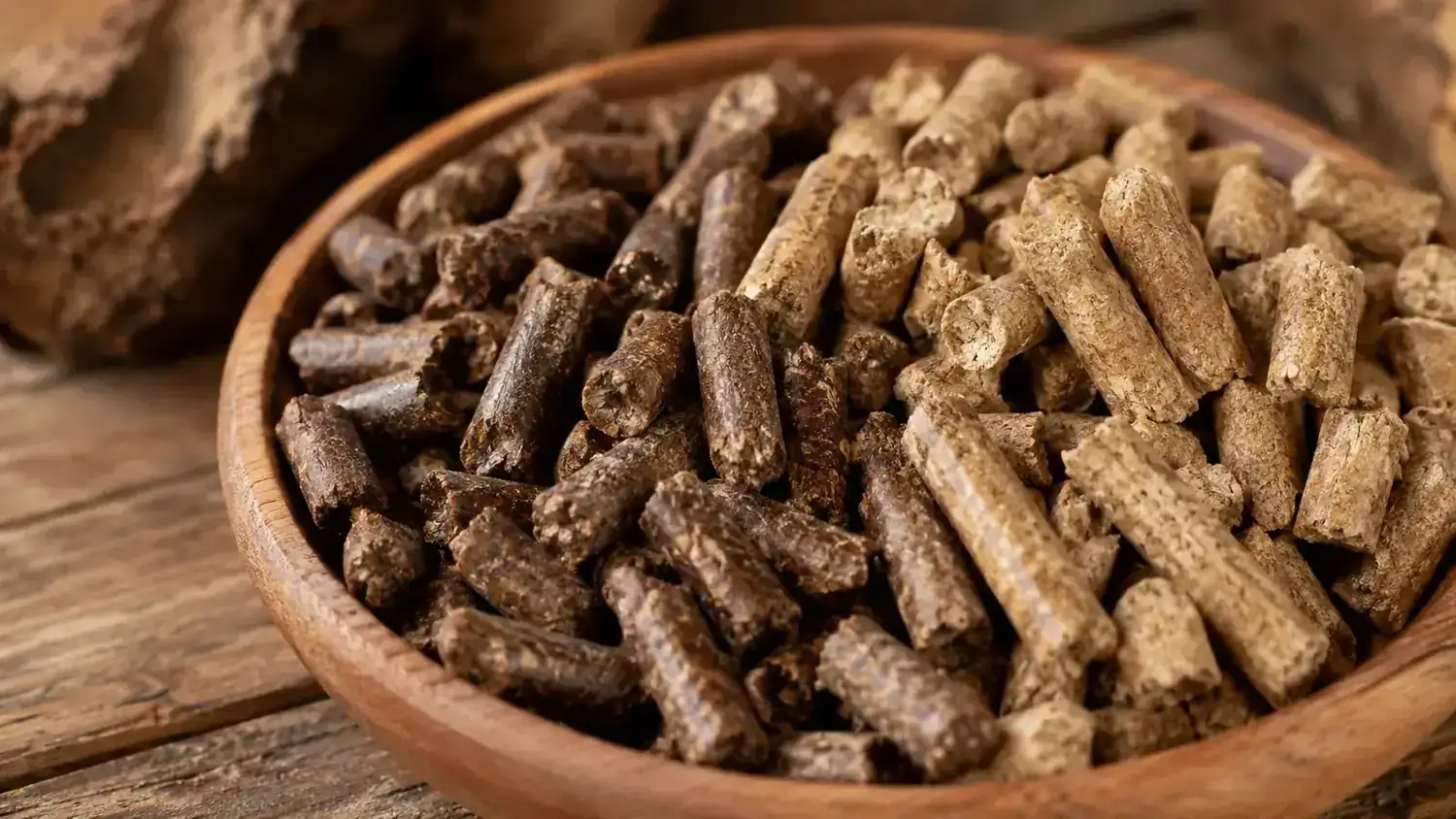
A lot of people assume wood means charcoal, and charcoal means babysitting the vents all afternoon. Pellets are different. You set a temperature on the controller, the auger feeds pellets automatically, and the fire stays consistent within a few degrees. Traeger Signature Blend pellets are low-moisture hardwood, which means they burn at a predictable rate and do not cause temperature spikes from excess moisture. You get charcoal-level flavor without the charcoal-level anxiety.
Chicken Thighs That Actually Taste Smoked, Not Just Grilled.
Chicken is the hardest sell for pellet converts because it cooks fast and does not give the smoke much time to work. But even a 45-minute spatchcock chicken over Traeger Signature Blend picks up noticeable cherry and hickory notes, especially on the skin. The same chicken on propane tastes like roast chicken with grill marks. Same bird, same rub, completely different result. The difference is most dramatic on cheaper cuts where the smoke has to do heavy lifting.
You Can Match the Wood to the Meat.
A blend like Traeger Signature Blend is designed to work across beef, pork, and poultry without clashing. Hickory is the right wood for brisket and pulled pork. Cherry is what makes ribs and poultry look and taste the way competition BBQ teams want. Maple softens the whole blend so it does not turn bitter on longer cooks. Propane gives you zero options. You get one flavor: none. A quality pellet blend gives you one bag that covers your whole weekend rotation.
After two seasons of weekly cooks, we keep coming back to Traeger Signature Blend because it works on everything from weeknight chicken thighs to a 14-hour overnight brisket. One bag, zero guessing.
The Low-and-Slow Cook Is Where Pellets Pull Completely Away.
Long cooks at 225 to 250 degrees are where the flavor gap between pellets and propane becomes impossible to ignore. At those temperatures, smoke has hours to penetrate the meat, build the bark, and develop the deep mahogany color that signals a well-smoked piece of protein. Most propane grills struggle to hold a stable temperature that low. And even if they could, there is no smoke to deposit. Pellet cooks at low temperature are essentially the entire reason pitmaster culture exists.
Amazon Shop Traeger Signature Blend for Your Next Low-and-Slow Cook →
Traeger Signature Blend Has 50,000 Reviews for a Reason.
We are not going to tell you to just trust the numbers, but 50,956 reviews with a 4.8-star average is not a fluke. That is years of weekend pitmasters, competition cooks, and backyard beginners all arriving at the same conclusion: this blend works, burns clean, and does not leave bitter or chemical off-notes. The complaint pattern in negative reviews is almost always about shipping damage, not the pellets themselves. The product has a loyal following because it consistently delivers.
The Per-Cook Cost Is Lower Than You Probably Think.
At today's price, a bag of Traeger Signature Blend runs through roughly four to six hours of cooking at 225 to 250 degrees on a mid-size pellet grill. That breaks down to a few dollars per cook for the fuel. Propane is not dramatically cheaper, and it delivers a fraction of the flavor. Once you factor in the quality difference in the food, wood pellets are not a premium you are paying, they are a value you are getting. That math is why people who switch rarely go back.
What We Would Skip
Not every pellet on the shelf earns your money. We have run bags of no-name store-brand pellets that smelled fine but produced less smoke, burned faster, and left more ash in the firepot. The red flag with cheap pellets is filler wood or excessive moisture. A bag that feels unusually light, or pellets that crumble under finger pressure, signal inferior compression and wood quality. We stick with Traeger Signature Blend because the consistency across bags has been reliable season after season. That matters more than saving two dollars on a 20-pound bag when you have a 10-hour brisket in the works.
Ready to taste the difference? Start with the blend 50,000 pitmasters trust.
Traeger Signature Blend is 100% all-natural hardwood with no binders, no fillers, and no bark. Hickory, cherry, and maple in one bag. Check today's price on Amazon and see why it is the top-selling pellet on the market.
Amazon Check Today's Price on Amazon →