
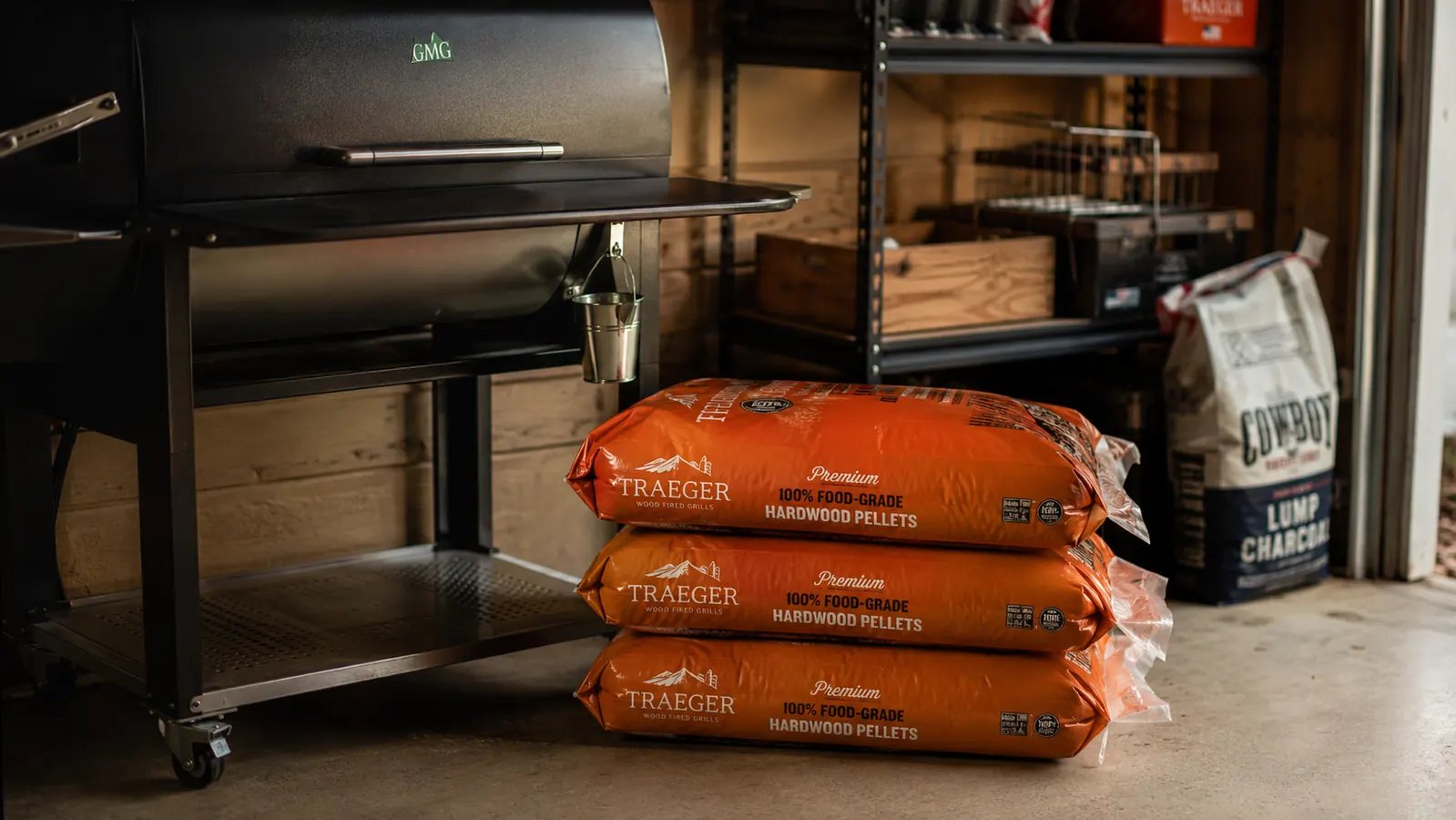
We burned through our first bag of Traeger Signature Blend on a Saturday morning in early spring, loading a 7 lb pork shoulder onto our Z Grills pellet grill at 6 a.m. and not pulling it until almost 5 p.m. By the time we sliced into it that evening, the smoke ring ran nearly half an inch deep and the bark had that dark, papery crust that most backyard cooks chase for years without ever quite nailing. That cook changed what we reach for every single weekend.
Since then, we have gone through well over 20 bags of Traeger Signature Blend across pork shoulders, spare ribs, full packer briskets, spatchcocked chicken, and even a few whole salmon sides. This review is the full report on what we have learned: where these pellets genuinely perform, where they fall short, and whether they are worth the price when cheaper options are sitting on the same shelf at the hardware store.
The Quick Verdict
Traeger Signature Blend is the most consistent all-purpose pellet we have used. The maple, hickory, and cherry combination produces a balanced smoke that works on every protein without overpowering lighter meats. The only real knock is price: you pay a brand premium, and budget pellets from Bear Mountain or Kingsford can get you 80 percent of the way there for less money.
Amazon Check Today's Price →Your next cook deserves better pellets. Check what Traeger Signature Blend costs right now.
With nearly 51,000 Amazon reviews and a 4.8-star rating, Traeger Signature Blend is the most-reviewed pellet on the market. Prices fluctuate, and bulk packs are often cheaper per pound.
Amazon Check Today's Price on Amazon →How We Have Used These Pellets
Our test rig is a Z Grills ZPG-450A2 with the PID V3.0 controller. We run it on a concrete patio in central Texas, which means summer ambient temps in the mid-90s and occasional wind that plays havoc with temperature consistency. We mention this because pellet performance is not just about the wood itself. Moisture content, pellet density, and how the feed auger handles different brands all affect what you actually taste.
We set up each long cook at 225 to 250 degrees F, dialing up to 275 near the end of a brisket stall or when finishing chicken skin. We tracked grill temperature variance with a Govee wireless probe sitting about two inches above the grate and logged the cook time and smoke ring depth after every session. The chart below shows our smoke ring results across four representative cooks using Signature Blend versus other pellets we tested in the same period.
We also stored every bag the same way: inside the garage on a wire shelf, off the concrete floor, in a sealed five-gallon bucket after opening. Pellet storage matters more than most people realize. A bag left outside with the top folded over will absorb humidity and feed poorly within a few weeks.
The Signature Blend Formula: Maple, Hickory, and Cherry
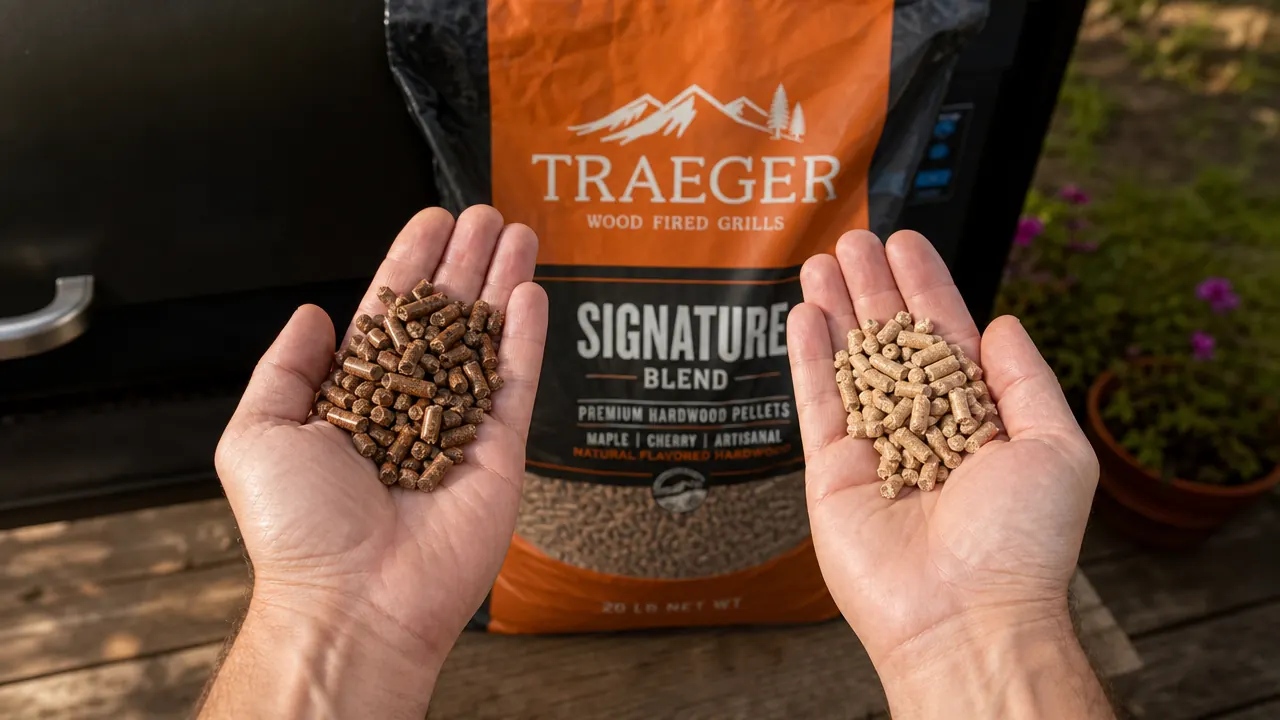
Traeger does not publish the exact ratio of the three woods, but the flavor profile tells the story clearly. Hickory carries most of the traditional Southern BBQ smoke character: assertive, slightly bitter on the back end, and excellent at building bark on beef. Cherry softens that edge and adds a faint sweetness that you notice most on pork and poultry. Maple rounds out the middle with a clean, mild base that keeps the whole blend from tipping into the harsh territory that straight mesquite or oak can reach on a long cook.
The practical effect is a pellet that plays well with nearly everything. On a 15-hour full packer brisket, the smoke flavor is deep but not aggressive. On baby back ribs at a 3-2-1 schedule, you get a noticeable ring and a gentle sweetness in the bark. On spatchcocked chicken at 325 degrees F, the smoke is present without dominating the way pure hickory can. This is the core argument for a blend over single-wood pellets: versatility. If you cook a variety of proteins across your season, a balanced blend saves you from swapping bags between sessions.
On a 15-hour brisket, the smoke flavor is deep but not aggressive. On ribs, you get a noticeable ring and a gentle sweetness in the bark. This is the core argument for a blend.
Burn Consistency and Ash Output Over Time
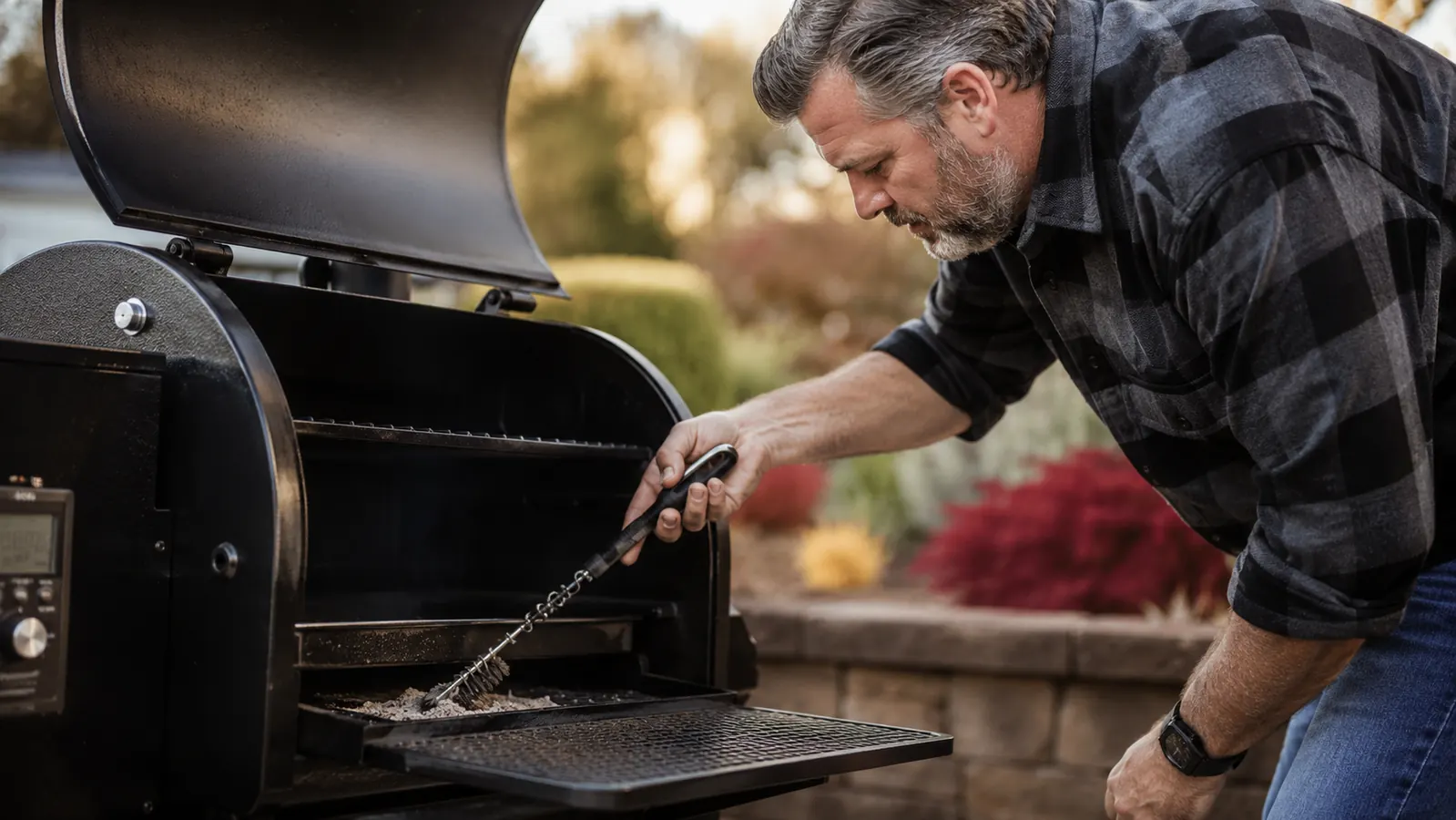
Ash output is the factor most reviews skip over, and it matters more than you might think. Higher ash means more frequent cleanouts, which means more downtime between cooks and a higher risk of ash buildup interfering with the burn pot sensor on some grills. Traeger Signature Blend produces what we would call moderate ash. It is not the cleanest-burning pellet we have used, but it is far cleaner than a few no-name bags we tried from a local farm supply store. On a typical 8-hour cook, we pull about two tablespoons of ash from the burn pot. After a long 14-hour brisket session, we get roughly four to five tablespoons.
Temperature consistency during the cook is strong. Using our Z Grills PID controller on a 250-degree set point, we typically see variance of plus or minus 8 degrees F at the grate level. That tightens up to plus or minus 5 degrees when the ambient temperature is below 85 degrees F. We attribute part of this stability to the pellet density: Traeger pellets are noticeably harder than some budget competitors, which means the auger feeds them at a more consistent rate without the jamming or bridging issues we have seen with softer pellets.
One thing to be aware of: Traeger pellets are slightly larger in diameter than some other brands. This is not a problem for most pellet grills, but if you own an older model with a narrow auger tube, confirm compatibility before buying a case.
Smoke Ring Results Across Protein Types
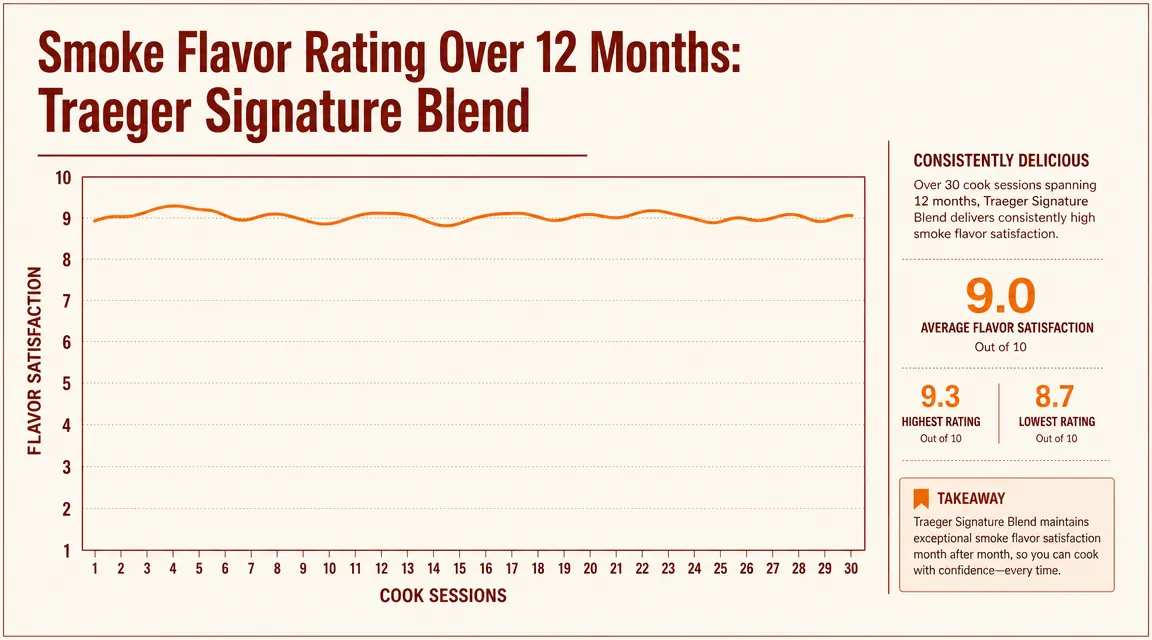
The smoke ring is the pitmaster's scoreboard. It is a visual cue that smoke penetrated the meat early in the cook, before the surface proteins set and stopped absorbing. A deep ring does not automatically mean better flavor, but it does indicate that the wood combustion chemistry was working correctly. Our data across multiple cooks with Traeger Signature Blend showed consistent rings of 0.38 to 0.44 inches on brisket flat, 0.28 to 0.35 inches on pork shoulder, and visible but thinner rings of 0.15 to 0.20 inches on chicken thighs.
For context, the same grill with a no-name big-box-store pellet blend produced rings of 0.22 to 0.28 inches on brisket and barely visible rings on chicken. The difference was consistent across six back-to-back cooks, alternating pellet brands with similar weather conditions. The Signature Blend outperformed the budget option by a meaningful margin on beef specifically.
Moisture Content and Bag-to-Bag Consistency
This is where Traeger earns its price premium most clearly. We have opened 20-plus bags over the course of a year and not once encountered a bag with significant moisture issues, broken pellets, or fines (the dust at the bottom of the bag that clogs augers). The pellets arrive uniform in length, around three quarters of an inch, with clean cut ends and no visible surface checking that indicates high moisture content.
Compare that to two bags of a competing discount brand we tried back to back. The first bag was fine. The second had noticeably soft pellets that crumbled when pressed between two fingers and produced a higher-than-normal amount of fines. That bag also caused the auger to jam twice during a single cook, which forced us to shut down the grill, clear the jam, and restart at mid-cook. That kind of quality control variance is the real cost of saving a few dollars per bag.
What I Liked
- Balanced maple, hickory, and cherry blend works well on beef, pork, poultry, and fish without overpowering lighter proteins
- Consistent pellet density and low moisture content means reliable auger feeding and minimal jamming
- Moderate ash output keeps burn pot cleanouts manageable on long cooks
- Strong bag-to-bag consistency across 20-plus bags over one year of testing
- Nearly 51,000 Amazon reviews with a 4.8-star rating signal long-term market reliability
Where It Falls Short
- Price per pound runs 15 to 25 percent higher than comparable blends from Bear Mountain, Kingsford, or CookinPellets
- The blend profile is intentionally moderate, so cooks who want an aggressive hickory or bold mesquite character will need a single-wood pellet instead
- Slightly larger pellet diameter than some competing brands, which can cause fitment concerns on older auger-style grills
- 20 lb bag sells out in one or two long cooks if you are running a large offset-style smoker with a big hopper
How the Flavor Compares to Single-Wood Pellets
We have cooked with pure hickory, pure cherry, and pure apple pellets from different brands alongside the Signature Blend, and the comparison is instructive. Pure hickory at 225 degrees F on a long pork shoulder gives you a more intense, almost bitter smoke edge that some pitmasters love and others find overwhelming. Pure cherry produces a noticeably sweeter, more delicate smoke that shines on poultry and fish but can get lost on a thick brisket flat. Pure apple is even milder and works beautifully for lighter proteins like pork tenderloin or whole salmon.
The Signature Blend lands deliberately in the center of all of those. It will not blow anyone away with a single dramatic flavor note. What it does is produce reliable, well-rounded BBQ smoke that makes every cook presentable, which is the higher-probability outcome for a weekend pitmaster who is not chasing competition trophies.
Who This Is For
Traeger Signature Blend makes the most sense for the weekend pitmaster who runs a variety of proteins across the season. If you smoke brisket one weekend, ribs the next, and whole chickens the weekend after that, a single bag of Signature Blend covers all three without flavor mismatches. It also makes sense for newer pellet grill owners who do not yet want to manage a pantry of single-wood pellets for specific proteins. The versatility function is genuinely valuable when you are still building your flavor instincts.
This pellet is also a smart pick for anyone who has had quality control problems with discount pellets. The consistent density, low moisture, and minimal fines mean one less variable to troubleshoot when a cook goes sideways. For the cook who is dialing in a new grill or a new recipe, removing pellet quality as a variable is worth something.
Who Should Skip It
If you cook exclusively beef and want maximum bark and smoke ring depth, a straight hickory or oak pellet will serve you better. The Signature Blend's cherry and maple components soften the smoke in ways that are a genuine tradeoff on thick beef cuts. Similarly, if you are on a tight budget and cooking for a large family every weekend, the price difference between Signature Blend and a solid budget pellet like Bear Mountain BBQ adds up fast over a full season. Bear Mountain's competition blend is a legitimate alternative at a lower price per pound and holds up well on quality.
If you want to explore how Traeger Signature Blend compares directly to Bear Mountain on price and smoke output, we break that down in our head-to-head comparison. And if you are still on propane and wondering whether the switch to wood pellets is worth the grill investment, our piece on why wood pellet flavor beats propane runs through the practical reasons.
One bag is all it takes to know if Signature Blend is your permanent pellet.
Traeger Signature Blend is in stock on Amazon and eligible for Prime shipping. If you buy a two-pack or larger bundle, the per-pound cost comes down noticeably. Check the current price and bundle options before you order a single bag.
Amazon Check Today's Price on Amazon →