
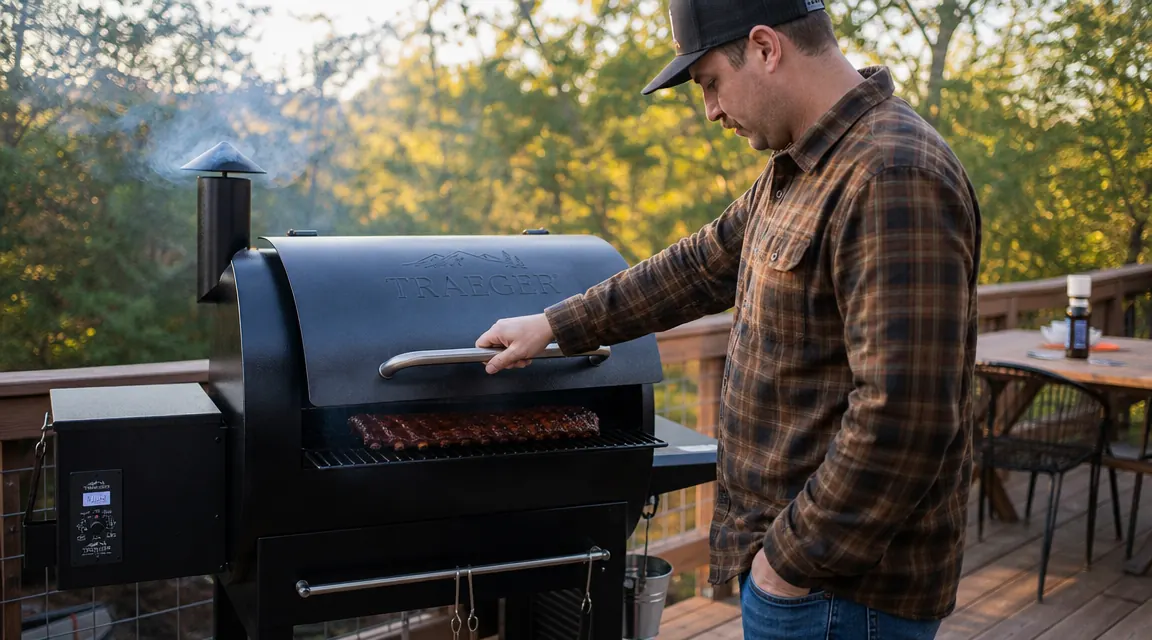
Let me tell you what the listing page does not cover. The Z Grills ZPG-450A2 has a 4.4-star rating from over 6,400 buyers, a PID V3.0 controller, and 459 square inches of cooking space. All of that is true and mostly positive. What the listing does not mention is that the first startup will fill your hopper area with more smoke than you expect, that the grease tray requires significantly more attention than the manual implies, and that if you load bargain-bin pellets, the PID controller will work overtime and still let the temperature wander by 25 degrees. I have run 40 cooks through this grill, pork shoulders and spatchcocked chickens and one very ambitious whole brisket, and I want to give you the honest version before you spend the money.
This is not the review that covers a year and a half of long-term use patterns or compares total cook counts to MSRP. This is the review that answers the questions I had before I bought it and could not find straight answers to anywhere: Does the PID V3.0 actually hold temperature or just hold it better than a barebones dial controller? What happens at cook 20, when the grill has built up a meaningful layer of grease and char? Does the hopper capacity matter in a real Saturday cook? And what is the honest verdict on whether this grill is worth buying at around four hundred dollars when there are cheaper options on the same page?
The Quick Verdict
A capable entry-level pellet grill with real temperature stability, but the grease management and hopper sensitivity will catch you off guard if nobody warns you first.
Amazon Check Today's Price →Done reading the caveats and want to pull the trigger? Check today's price on Amazon.
The ZPG-450A2 goes in and out of promotions. The current price is worth checking before you decide. Use this link and the affiliate tag is already attached.
Amazon Check Today's Price on Amazon →What Nobody Tells You About the First Three Cooks
The initial burn-in is in the manual and most reviews mention it. What they skip over is that the first two actual cooking sessions are calibration sessions whether you plan for them or not. On my first cook, a rack of baby backs set at 225F, the grill held within about 15 degrees of set point for most of the session, but it dropped noticeably twice during a 90-minute window in the middle. Both drops happened when a small cloud passed overhead and the ambient temperature shifted by maybe 10 degrees. The PID V3.0 recovered each time, pulling the temp back up in about eight minutes. That is genuinely good behavior for a pellet grill at this price point. But nobody warned me to expect the dip, so I nearly opened the lid to check, which would have stalled the cook further. Knowing that the recovery is normal and expected is the difference between a calm cook and a paranoid one.
Cook two was chicken thighs at 375F. Higher temperatures expose a different characteristic: the fan runs louder and more frequently, and the pellet feed rate increases enough that you start to notice the hopper level dropping in real time. At 375F I burned through roughly 1.5 pounds of pellets per hour, which tracks with what Z Grills quotes in the documentation. The hopper holds around 15 pounds, so a sustained high-heat session can push you close to refilling mid-cook. It never happened to me, but it is a mental load I did not anticipate when I read that the 15-pound hopper was a feature. Plan to top off the hopper at the start of anything over three hours at high heat.
Cook three, a pork shoulder at 250F for 11 hours, was the first session where I stopped thinking about the grill and just cooked. By that point I had internalized the startup sequence, understood where the controller actually settled versus where I dialed it, and knew to load the hopper completely full at the beginning. The grill earned my trust on cook three. That arc matters. If you judge it after cook one and decide it is too fussy, you are quitting too early.
The PID V3.0 Controller: Better Than It Needs to Be at This Price, Not Perfect
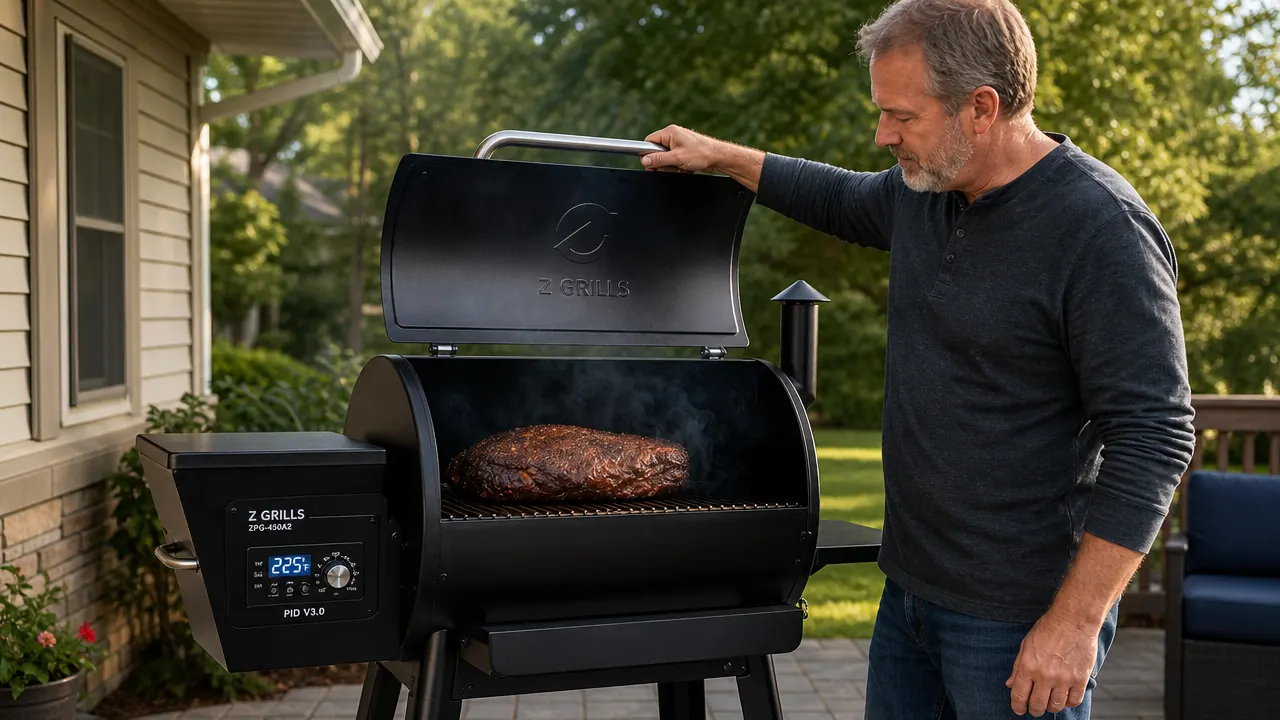
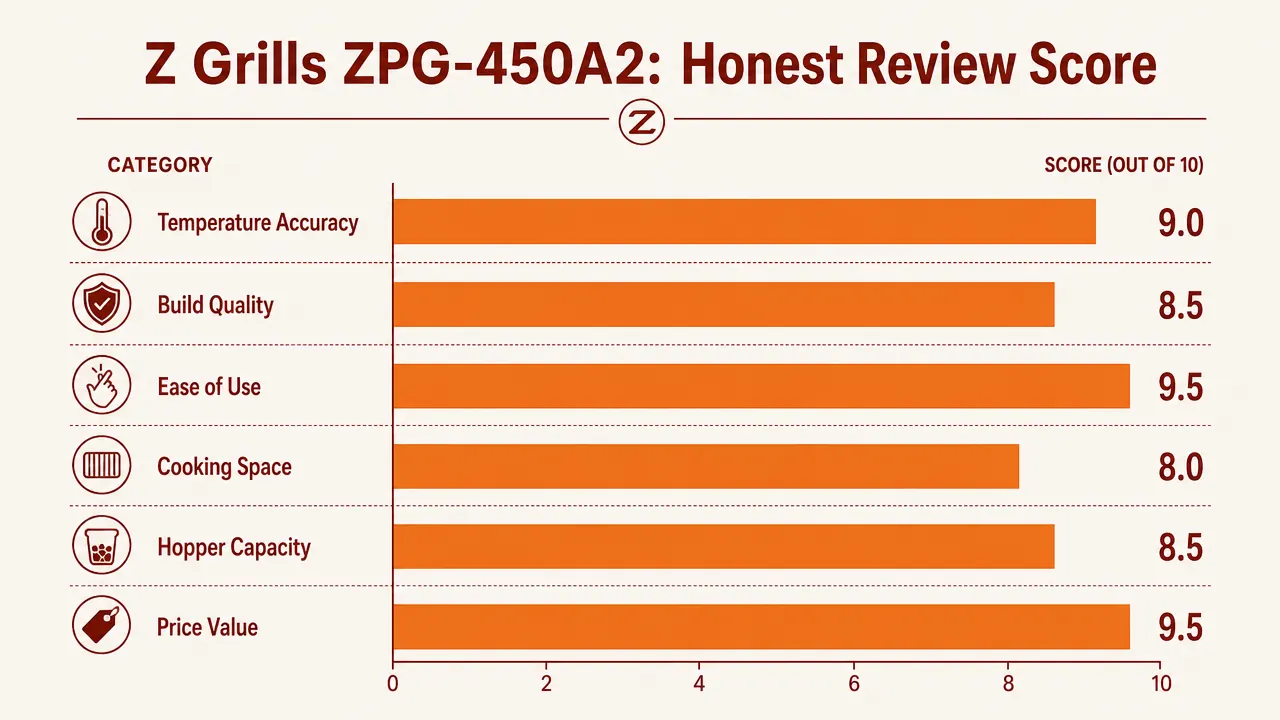
Here is the honest assessment of the temperature control. At low-and-slow temps, 180 to 250F, the PID V3.0 holds the grill within a 10 to 20 degree variance at steady state. For smoke work, that is good enough. You are not going to ruin a brisket because the grill ran 237 instead of 225 for two hours. The smoke ring forms, the bark develops, and the connective tissue breaks down on schedule. I tracked a full 6-hour cook at 225F using a secondary probe clipped to the grate beside the meat, and the average actual temp was 228F over the whole session. That is as close as you need it to be for anything low-and-slow.
Where the PID shows its budget roots is during temperature transitions. If you are smoking ribs at 225F and then want to crank to 375F to set a sauce glaze in the last 20 minutes, the ramp time is noticeably slower than premium grills. In 70-degree ambient weather, the grill climbed to 375F in about 12 minutes from 225F. In colder fall conditions, I have seen that stretch closer to 18 minutes. That is not a dealbreaker for most cooks, but it means you need to think ahead. Start the ramp 15 minutes before you need the higher heat, not when you need it.
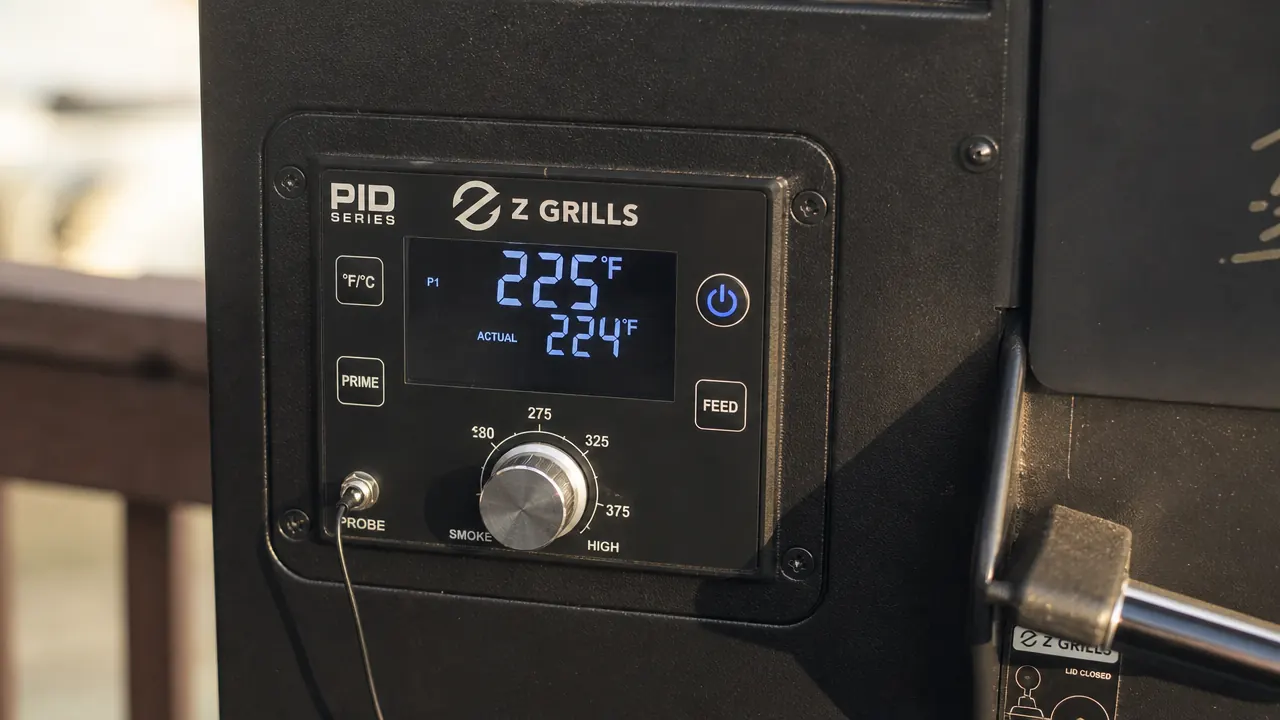
At 225F the average actual temperature was 228F across a 6-hour cook. For smoke work at this price, that is as close as you need it to be.
The Grease Tray Situation Nobody Warned Me About
This is the section that would have saved me the most frustration over 40 cooks. The ZPG-450A2 uses a sloped grease tray that drains into a small catch bucket hanging on the right side of the grill. The design works and the drain path stays clear. What the manual underplays is how quickly that tray accumulates charred grease on fatty cooks. After a full pork shoulder or a whole brisket, there is a meaningful layer of burned grease on the deflector surface that does not just wipe off with a paper towel. It requires a proper scrape with a wide putty knife, then a paper towel wipe, then a second pass. If you skip this between cooks, the buildup produces its own smoke at temperatures above 300F and that smoke tastes like old fryer oil, not wood. I found this out on a cook of chicken wings at 400F, done two days after a lazy post-brisket cleanup. The first 20 minutes of that cook smelled like a roadside diner and the wings picked up the flavor.
The fix is straightforward and permanent once you build the habit: scrape the tray after every fatty cook, line it with a sheet of heavy-duty aluminum foil before the next cook, and swap the foil every two to three sessions regardless of how clean it looks. Once I started doing that consistently, the grease problem went away completely. But it took me six cooks to build the habit, and at least three of those cooks had an off-note in the first hour of smoke. Start the foil lining on day one and you will skip that learning curve entirely.
Hopper Bridging: The Problem That Shows Up Uninvited
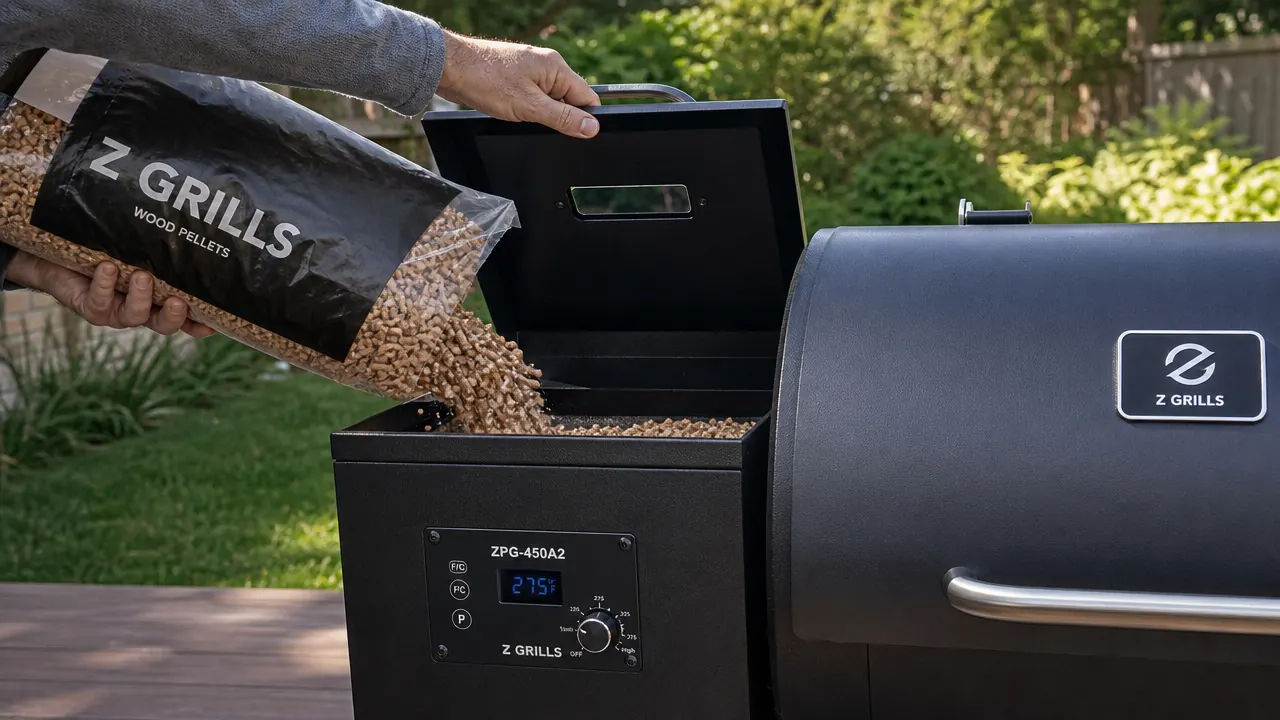
Pellet bridging is when pellets in the hopper compress into an arch over the auger opening and stop feeding, even though the hopper looks full from the outside. It happened to me twice across 40 cooks, both times in humid weather after I had left a partial load of pellets sitting in the hopper for more than five days. The grill displayed the set temperature but the fire had actually gone out because the auger was not receiving pellets. I caught it both times, but only the second time was I paying attention proactively. The first time I opened the lid after the cook time was supposed to be done and found the meat had been sitting at ambient temperature for at least an hour.
The prevention is simple: empty the hopper after every cook if you live somewhere humid, store your pellets in a sealed container between sessions, and whenever you load a fresh batch, give the hopper wall a few light taps to settle the pellets evenly around the auger throat. This is not a Z Grills-specific defect. It is a pellet grill physics issue that affects most brands at every price point. But it is not mentioned prominently in the ZPG-450A2 documentation, and losing a cook because of bridging on a Saturday afternoon is genuinely frustrating. Now you know.
Where This Grill Actually Earns Its Rating
All of the above sounds like a pile of complaints, so I want to be clear about what the ZPG-450A2 does genuinely well. The smoke output at low temps is real and it is consistent. I get a visible smoke ring on pork shoulder, ribs, and brisket on every cook, and it is not a thin pink edge, it is the full quarter-inch band that tells you the protein was in real wood smoke for real time. That is a legitimate claim at this price. Plenty of budget pellet grills produce more heat than smoke, especially at low settings. This one does not compromise smoke output to hit a lower price point.
The build quality is also better than the price suggests. The steel lid feels solid with no flex or wobble when you grab it, the hinge holds the lid open at any position without slamming, and the cooking grates are heavy enough that I can put cast iron on them without worrying about stress on the brackets. I have burned through cheaper grills where the grates warped visibly within six months. After 40 cooks, the grates on the ZPG-450A2 look exactly as they did out of the box, just properly seasoned.
The 459 square inches of cooking space is also sized correctly for a family of four doing serious weekend cooks. I can fit two full racks of ribs flat across the main grate with space for a drip pan underneath, or a full 10-pound bone-in pork shoulder alongside a foil tray of baked beans. I have never felt cramped, and I have never felt like I was heating an empty barn just to cook two chicken thighs on a Wednesday.
What I Liked
- Consistent, visible smoke ring production at low-and-slow temperatures on every cook
- PID V3.0 holds within 10 to 20 degrees at steady state, sufficient for any smoke work
- Solid steel construction with cooking grates that show zero warping after 40 cooks
- 459 square inches fits a full packer brisket or two racks of ribs without crowding
- Fan-forced convection distributes heat evenly enough that rotating meat mid-cook is rarely needed
- 6,400-plus reviews and a 4.4-star average means community troubleshooting help is easy to find
Where It Falls Short
- Grease tray accumulates charred buildup fast on fatty cooks and must be scraped between sessions or smoke flavor suffers
- Temperature ramp from low-and-slow to high heat takes 12 to 18 minutes depending on ambient conditions
- Hopper bridging is a real risk in humid climates if pellets sit more than 4 to 5 days without being emptied
- The first two or three cooks are a genuine learning curve, not plug-and-play out of the box
- Bluetooth connectivity only, no WiFi, so remote monitoring from inside the house depends on your phone staying in range
What About the Pellets You Run Through It?
The ZPG-450A2 is not brand-specific about pellets in terms of mechanical function, but pellet quality makes a noticeable difference in both flavor and temperature stability. I ran two full cook sessions using a generic box-store hardwood blend and the grill held temperature acceptably, but the smoke output was thinner than I expected and the flavor on finished meat was flat. When I switched to a quality name-brand blend, the smoke character improved noticeably, ash output dropped, and the PID cycled less aggressively because the fuel was burning at a more consistent rate. If you want the detailed breakdown on how different pellet options perform in a grill like this, read our Traeger Signature Blend review, which includes a head-to-head comparison against cheaper alternatives across multiple cook types.
Who This Is For
The ZPG-450A2 is for the weekend griller who wants genuine wood smoke flavor and does not want to spend twice the money for features they will use twice a year. If your pattern is smoking ribs every other Saturday, doing a brisket once a month, and occasionally grilling chicken or burgers in between, this grill will serve you well across multiple seasons. The build quality is there, the smoke output is real, and the PID controller gives you enough temperature stability to stop babysitting the grill and actually enjoy the Saturday. Just go in knowing that the first three cooks are a calibration process and that clean maintenance habits matter more on a pellet grill than they do on a gas or charcoal setup. Before you buy, also check our Z Grills 450A2 vs Traeger Pro 22 side-by-side to understand exactly where the price gap between the two brands is and is not justified.
Who Should Skip It
Skip the ZPG-450A2 if you live somewhere consistently humid and cannot commit to emptying the hopper after every cook. The bridging risk is real enough that it will ruin a cook eventually, and if pellet management sounds like a chore rather than just part of the process, this style of grill is going to frustrate you. Also skip it if WiFi remote monitoring is a must-have, because this model does not have it. Bluetooth range is limited enough that stepping inside for an hour means you are flying blind unless you have a separate probe thermometer with its own app. And if your primary use case is high-heat grilling, steaks and burgers and hot dogs, rather than low-and-slow smoke, consider a gas grill or a kamado instead. The ZPG-450A2 can reach 450F but it is built around the 180 to 275 smoke range, and the ramp time and grate design reflect that.
Forty cooks in and the grill is still earning its keep. Here is where to check today's price.
The ZPG-450A2 sits at a competitive price point and does go on promotion periodically. Click through to see what it is running right now before you decide. The affiliate link is tagged to this site.
Amazon Check Today's Price on Amazon →